- Going Places
- Posts
- Portfolio Careers Come in 5 C's- Which is Yours?
Portfolio Careers Come in 5 C's- Which is Yours?
The complete playbook to start a new revenue stream

Janel Abrahami
February 06, 2026

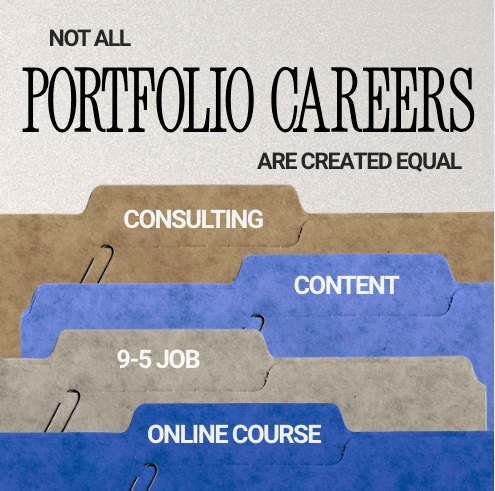

A portfolio career is an approach to work where, instead of having a single full-time job, you create a "portfolio" of different clients, projects, passions.
Just like investors have portfolios of companies they invest in and creatives have portfolios of projects they’ve worked on, modern professionals like us are building portfolios of a few different titles, clients, and income streams to create an entire career.
The idea of a portfolio career might seem radical if you're used to thinking about work in traditional terms. But in many ways, it's a natural evolution of the gig economy and the increasing desire for work-life balance and professional fulfillment.
When I first encountered the concept of portfolio careers, it was like a lightbulb moment.
Suddenly, all the different aspects of my professional life – my corporate job, my coaching practice, this newsletter, and my speaking engagements – didn't feel like competing interests. Instead, they became complementary parts of a diverse, fulfilling career that no one job description could fully capture.

When you shift your mindset from path 👉portfolio, you find:
You make more money. When one job provides your entire income, everything is riding on that one job. When you diversify your career portfolio, you build a bigger financial safety net.
You find more purpose. Similarly, when one job is your only source of professional identity, how you feel about your work is determined by what's going on at that job in this moment in time: office politics; quarterly earnings; your manager's mood. When you diversify, you take meaning & fulfillment back into your own hands.
You have more social support. Have you ever had your favorite manager resign out of the blue or feel totally isolated after losing your work BFFs when you change jobs? One be-all-end-all job has a huge impact on your social wellness, for better or worse. Tapping into different work communities brings more social stability, support, and fresh perspective.
A few years ago, I started by offering 1:1 career coaching on nights and weekends after my day job in corporate HR. I used the insights and takeaways from those clients to develop my proven career pivot frameworks (the same ones you’re implementing from my newsletter + social content!), and distilled those frameworks into an online course for more people to access.
I marketed that course on social media, which slowly but surely grew my platform. Eventually, I was making a very decent income on the side of my 9-5, and I think I could have continued growing both sides of my career for a while longer.
But what happened next was a perfect illustration of the larger context we’re living in:
One week, I’d noticed that my boss at my corporate job had been ignoring my emails for a day or so, and would only give vague, non-committal responses to my Slack messages. Suddenly, some of my big projects were “on hold,” and I knew what was coming.
I could almost hear the Psycho theme music as I logged into our last-minute Zoom call titled “Quick Update”-- I was laid off.
And suddenly, my side income became my only income.
While it was super jarring at first, this plot twist ultimately reinforced my belief in the portfolio career model. But how can you tell if this path might be right for you?
Here are some signs you’d thrive with a portfolio career:
You have multiple passions or skills that don't neatly fit into one job description.
You value flexibility and variety in your work life.
You're comfortable with a degree of uncertainty and enjoy the challenge of managing multiple projects.
You're looking for ways to diversify your income streams.
Whereas side hustles can be limited to the singular gigs or projects you pick up when you want them, portfolio careers have the potential to become entire businesses with layered projects within.
And in my experience, I’ve identified 5 distinct portfolio career “models” that are easiest for someone with a bit of corporate experience who wants to exchange their insights for money (versus their time) to implement on their own.
I call them the 5 C’s– and yes, I’ve personally experimented with all of them:
Consulting: This side hustle is best for someone who’s comfortable with executive presence and pitching their work to CEOS, founders & VIPs. It’s also a great option for someone with a few successful case studies in their portfolio– prospective clients will want to see your expertise in action and how you’ve helped businesses like theirs achieve a specific result.
Coaching: It’s such a buzzword now that it’s almost lost it’s meaning– Helping individuals achieve a desired transformation through dialogue and ethical protocols. Coaching could be best for the individual who is gifted at guiding someone through a transition or transformation– you understand how to break down a process into its parts for multiple different learning styles.
Courses: Online course side hustles have popped off since the pandemic boom, because they’re relatively simple to set up. You’re basically distilling your expertise into a passive resource that others can benefit from. Creating an online course may be best for the introverted or efficiency-focused individual who wants to package what they know into a comprehensive product and then profit from it indefinitely (as opposed to meeting with clients consistently in real-time).
Content Creation: Content can be such a lucrative side hustle for corporate professionals-- whether from brand partnerships, paid content subscriptions, or other paid opportunities that emerge from your consistency (like speaking or consulting).
Community: Best for someone who thrives on dialogue and connection—you understand how to facilitate conversations that help people feel seen in their professional struggles. Unlike courses or content, community is relational and allows you to deepen relationships over time, which unlocks multiple revenue streams downstream (coaching, speaking, brand partnerships).
Today, my own portfolio looks like: consulting + content creation + course, but it’s taken years to build out a collection as robust as this. And I’ve had to decide which elements to NOT include in my portfolio career– the jobs and projects that weren’t worth the ROI of my time, marketing, and mental energy (not all money is “good” money).
Remember, this isn't about abandoning stability or taking unnecessary risks.
It's about expanding your definition of what a successful career can look like. It's about creating a professional life that allows you to express all aspects of your talents and interests, that provides multiple streams of income and opportunities for growth, and that can adapt and evolve as you do.


*Heads up! Starting next week, this practical how-to section will be a weekly bonus for paid newsletter subscribers. This is the kind of detailed plug-and-play guide you’ll get every week when you upgrade to premium!
👉 Choosing your first “C” without overthinking it
Most people get stuck before they begin because they assume their first choice revenue stream has to be permanent. They search for the perfect long-term direction, which is another way of postponing movement entirely.
But portfolio careers rarely emerge from perfect clarity.
They emerge from sequence, from trying one direction, learning something useful, and letting that learning shape the next step.
A more helpful question, then, is not “Which of the five C’s is the smartest?”
It’s closer to: “Which one already has a pulse in my real life?”
Where do people naturally come to you for help or advice?
What kind of work leaves you feeling more energized than depleted, even when you’re tired?
Which activities feel interesting in a quiet, sustainable way (not exciting for a week, but engaging over time)?
What skills do I want to develop or showcase?
How much time can I realistically commit each week?
What kind of financial return am I hoping for?
Those factors tend to matter more than prestige, and energy is often a better compass than ego, especially at the beginning.
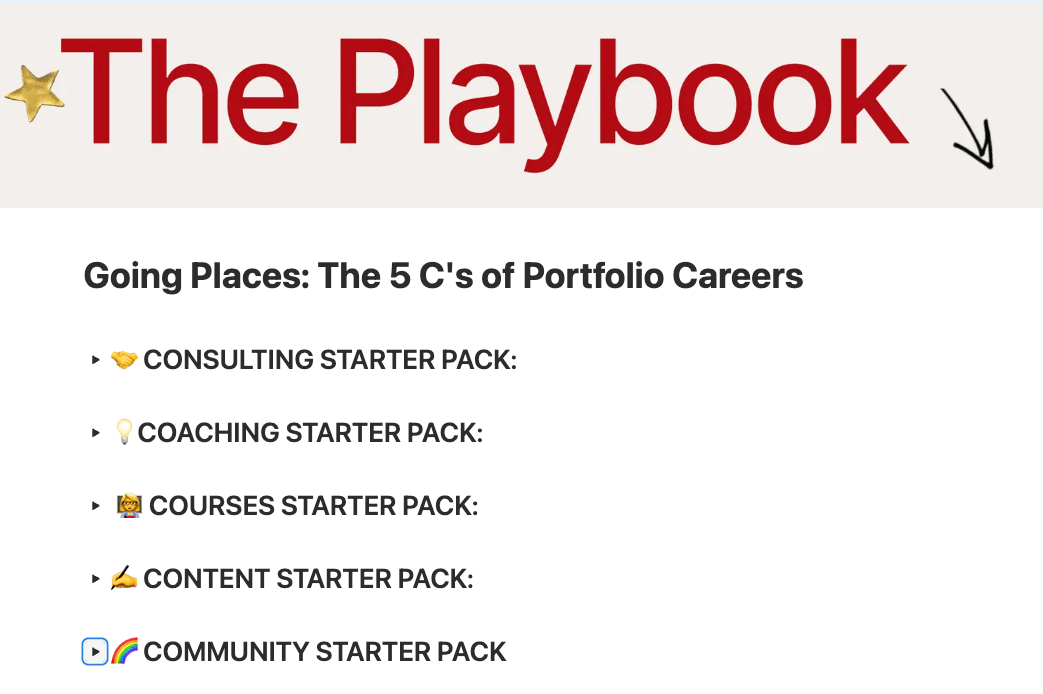
Dig into my comprehensive “starter packs” for everything you need to launch one or more of these revenue streams in the next 30 days!!

Love the newsletter but want more? Did you know I put together an entire course called Pivot with Purpose? Think of it like a supercharged version of all the best content from this newsletter, tailored to help you nail your career goals.
It’s about damn time you found a career that fits!

Pivot with Purpose is a self-paced online course that has helped 100’s of mid-career millennials land competitive roles in marketing, non-profit management, venture capital, and more! Unlock customizable networking scripts, interviewing & negotiation resources— most Pivoters earn back their investment in the course with their first negotiated offer! Don’t leave clarity, confidence- or cash- on the table.


Reply