- Going Places
- Posts
- Being Recognized For Your Work is Actually Pretty Simple
Being Recognized For Your Work is Actually Pretty Simple
How to never see another Brad or Chad get your opportunity again

Janel Abrahami
March 13, 2026

Let me say something that's going to sting a little — and then hopefully set you free.
Somewhere out there, a Brad or a Chad just got a role, a project, a speaking slot, a board seat, a promotion — that was, objectively, yours.
He's less experienced than you. Probably less thoughtful. Definitely less prepared. But he was visible. He was on their radar. His name came up in the room when you weren't in it, and that was enough.
This is one of the most demoralizing, under-discussed realities of corporate life for women who are doing everything "right."
You're excellent at your job. You're producing. You're showing up. And you keep watching opportunities land in the laps of people who seem to have done a fraction of the work — because they've mastered something you haven't: the art of being known.
So let's talk about what visibility actually looks like + why it doesn't require you to become an influencer to use it.


The Visibility Gap
We've been sold a lie that great work speaks for itself.
That if you keep your head down, deliver results, and wait your turn, the right people will notice.
But here’s what's actually happening: decisions about who gets promoted, tapped, or referred rarely happen in real-time performance reviews. They happen in casual conversations, Slack threads, on panels, and over coffee.
They happen in the mental Rolodex someone pulls out when they're thinking, who do I know who would be great for this?
If you haven't given people anything to remember you by outside of your immediate team, you're not in anyone's Rolodex. And the person who is (even if they're less qualified) will always have the edge.
The solution: make your thinking more visible.
You Don't Have to Be a Content Creator. But You Do Have to Be Visible.
This is where I want to push back on an assumption a lot of high-achieving corporate women hold: that visibility requires self-promotion, and self-promotion is performative, and performative content is for people who need the attention.
You don't need a personal brand in the influencer sense. You don't need to post about your morning routine or document your career pivots. You don't need 50k followers or a newsletter like this one to make this work for you.
You just need to share what you already know — consistently, intelligently, and in public.
Back when I was working in corporate full-time, I built a scrappy "thought leadership” framework for myself so certain coworkers couldn’t keep getting credit for my good ideas.
The Going Places Thought Leadership Model: “Know, Think, See, and Do”
Most people assume thought leadership content means having hot takes or radical ideas. But for corporate professionals, the bar is actually much lower — and the opportunity is much bigger — because so few people do it at all.
Here's what it actually looks like:
1️⃣ What You KNOW — Your expertise, made accessible. The how-to's, the dos and don'ts, the things that seem obvious to you because you've been doing them for a decade but would be genuinely useful to someone else. A quick breakdown of how you approached a tricky stakeholder situation. A post about what most people get wrong about performance reviews. The industry knowledge that lives in your head, finally exiting your head.
2️⃣ What You THINK — Your perspective and your stances. Where do you agree or disagree with the conventional wisdom in your field? What's your take on a trend, a news story, a shift happening in your industry? You don't need to be controversial — you just need to have a point of view. An opinion, clearly expressed, is incredibly rare on LinkedIn. Which means it gets remembered.
3️⃣ What You SEE — Trends, changes, patterns, cycles. What are you noticing in your work, your industry, your organization? What's shifting that other people haven't named yet? This is observation-as-content. It doesn't require expertise so much as attention — and attention is something you already have.
4️⃣ What You DO — Behind-the-scenes. Recaps. Live footage of your work in the world. Attended a conference? Share one thing you took away. Led a project? Reflect on what you learned. This is the least performative of all four — it's simply documentation of a professional life you're already living.

Note: You don't need to be in all four categories every week. But rotating through them even once or twice a month gives people a rounded, memorable sense of who you are and how you think.
What it Looks Like in Practice
I want to talk about Carmen Vincente for a second, because she's a perfect example of what this looks like in action.
Carmen, a social media strategist, just landed an incredible new full-time role at Slate and was recognized as a “LinkedIn Top Voice” all because she posted work-related content on LinkedIn.
She wasn't building an audience just for the sake of it — she was consistently demonstrating her thinking, her expertise, and her perspective in public. When the right people were in those conversations, they already knew her. She'd done the work of being on the radar before she ever needed to be.
That's the compounding effect of visibility: it feels like nothing in the moment, and then suddenly it's everything.
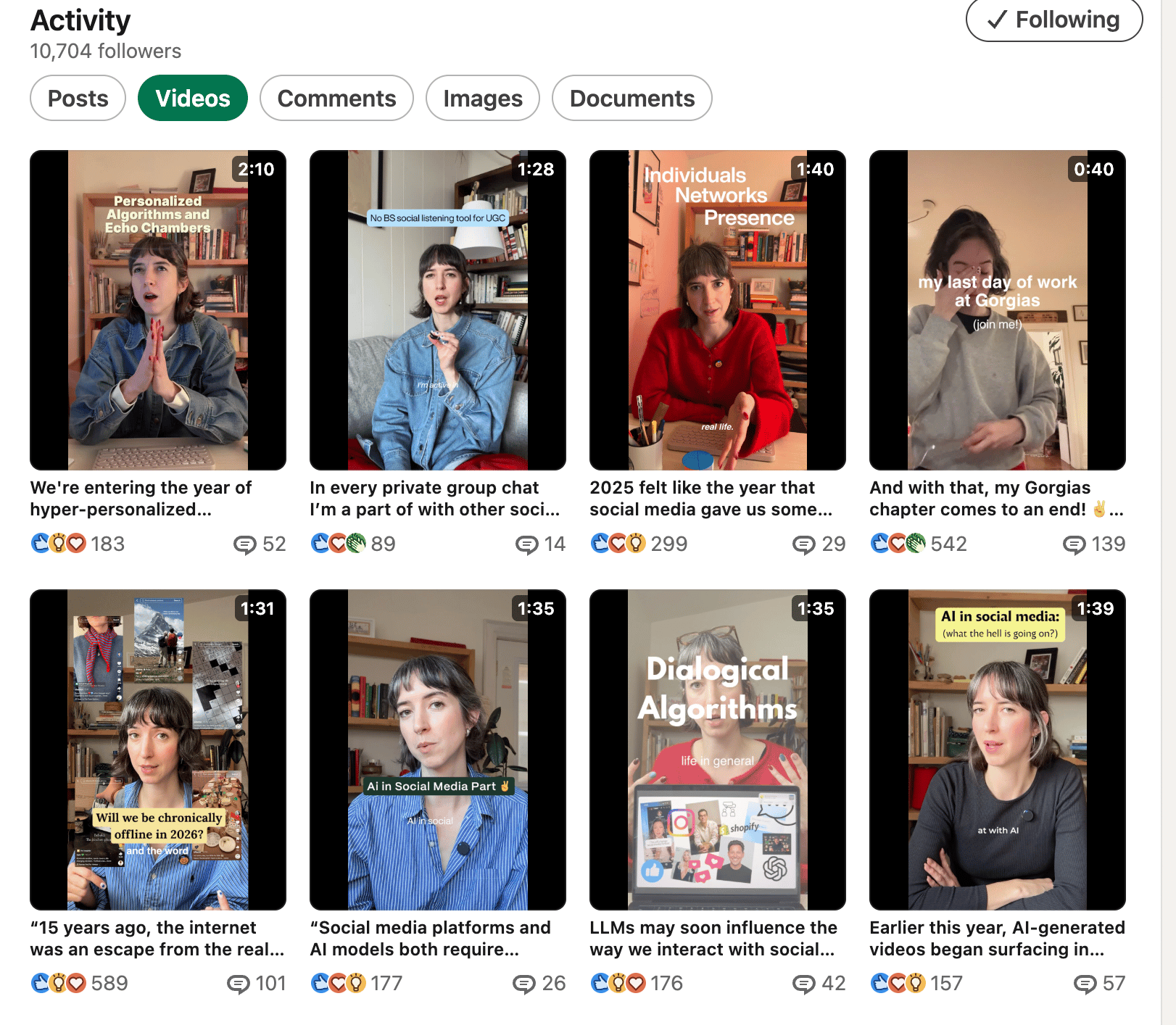
Notice: Carmen “only” has ~11k followers on LinkedIn, but what matters more is that the right people saw her posts.
What Consistent Visibility Actually Builds
When you show up consistently with what you know, think, see, and do, something starts to happen that's hard to manufacture any other way.
People begin to associate your name with a type of thinking. They forward your posts to colleagues. They mention you in conversations you're not in. They think of you when something comes up that sounds like you.
You stop being someone who does a job, and start being someone who has a perspective — and perspectives travel further than performance reviews ever will. (Not to mention, people with actual unique perspectives are painfully rare these days.)
This doesn't happen overnight, but it certainly compounds. And the alternative — staying invisible while waiting for great work to be enough — has a track record we've all seen play out in real time.
The next time a room full of decision-makers needs to fill an opportunity, you want to already be in their mental Rolodex. The content you share this week, this month, this quarter is how you get there.
Brad got there through golf and proximity. 😉
You can get there through what you actually have to say. 💁♀️

Love the newsletter but want more? Did you know I put together an entire course called Pivot with Purpose? Think of it like a supercharged version of all the best content from this newsletter, tailored to help you nail your career goals.
It’s about damn time you found a career that fits!

Pivot with Purpose is a self-paced online course that has helped 100’s of mid-career millennials land competitive roles in marketing, non-profit management, venture capital, and more! Unlock customizable networking scripts, interviewing & negotiation resources— most Pivoters earn back their investment in the course with their first negotiated offer! Don’t leave clarity, confidence- or cash- on the table.


Reply